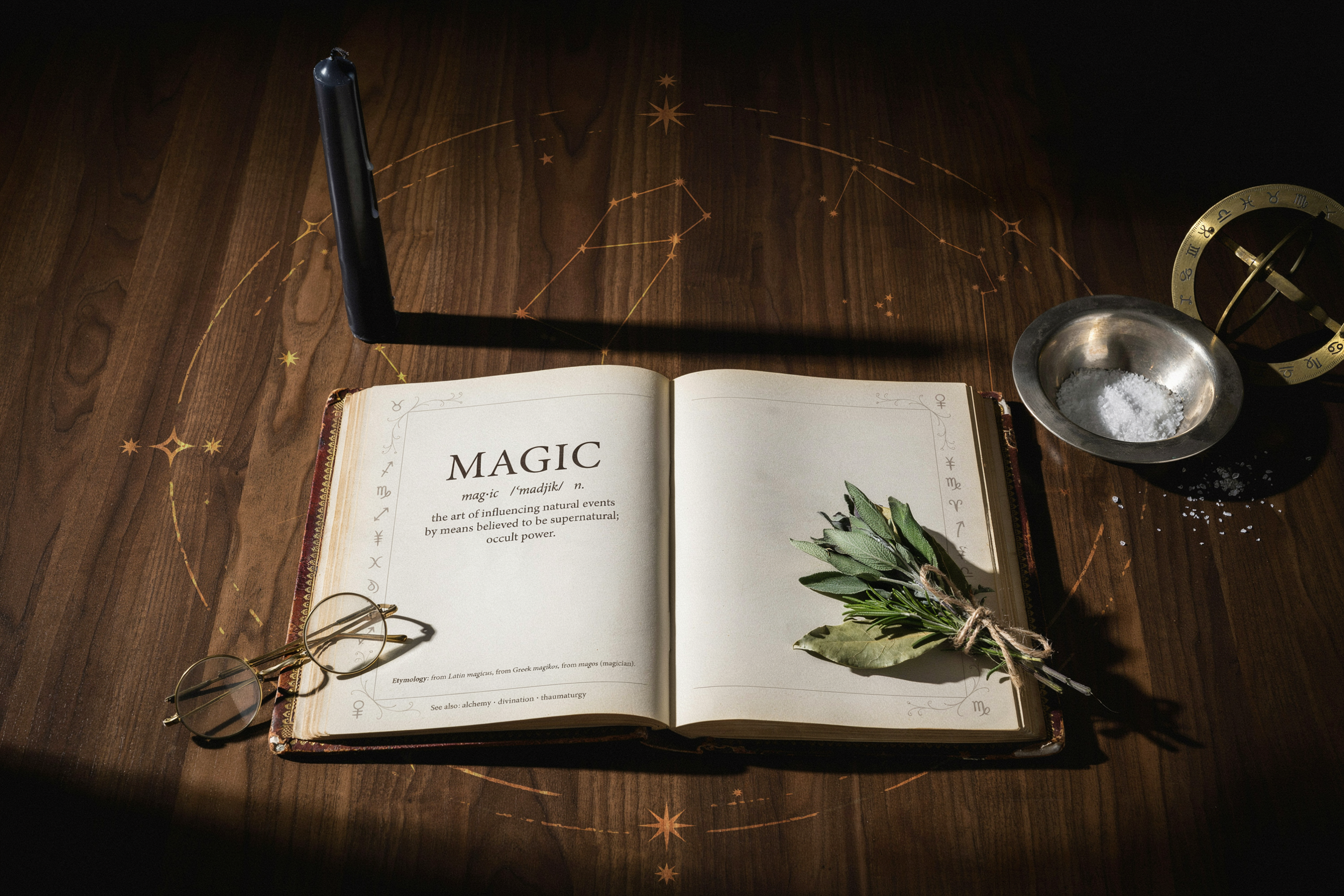
Magic is the practice of directing intention, energy, symbolism, and will toward a desired spiritual, energetic, or material outcome. Within witchcraft and esoteric traditions, magic is often understood as the art of working with unseen forces through ritual, correspondence, focus, and spiritual alignment.
Magic may involve spoken words, gestures, herbs, candles, symbols, tools, spirits, planetary timing, natural elements, or personal energy. Its forms vary widely, but its central principle remains the same: change is sought through intentional action that reaches beyond the purely mundane.
Definition of Magic
Magic is the intentional use of spiritual, symbolic, energetic, or occult methods to influence reality, perception, circumstances, or the self.
In witchcraft, magic is not limited to spectacle or supernatural display. It is more often subtle, ritualized, and deeply connected to meaning. A candle spell, a protective charm, a whispered blessing, a lunar ritual, or a carefully chosen herb placed upon an altar may all be considered magical acts when performed with intention and purpose.
Magic operates through relationship: between the practitioner and the natural world, between symbol and meaning, between will and action, between the visible and the unseen.
Meaning of Magic in Witchcraft
In witchcraft, magic is both a practice and a worldview. It recognizes that the world is layered with significance, and that symbols, cycles, materials, and intentions can be used as vessels for transformation.
Magic may be used for protection, healing, clarity, prosperity, love, banishing, divination, cleansing, manifestation, or spiritual connection. Some practitioners view magic as the movement of energy. Others understand it as psychological, symbolic, devotional, ancestral, or spiritual. Many traditions hold more than one interpretation at once.
The meaning of magic depends greatly on the tradition, culture, and practitioner involved.
Common Forms of Magic
Magic may appear in many forms, including:
- Candle magic: The use of candles, flame, color, and intention in ritual work.
- Herbal magic: The use of plants, roots, flowers, resins, and spices according to their magical correspondences.
- Protection magic: Practices meant to guard a person, place, object, or spiritual boundary.
- Lunar magic: Work aligned with the phases, signs, or cycles of the Moon.
- Sigil magic: The creation and charging of symbols designed to hold a specific intention.
- Divination magic: Practices that seek guidance or insight through tools such as tarot, runes, pendulums, scrying, or oracle systems.
- Glamour magic: The magical use of appearance, perception, confidence, and presence.
- Kitchen magic: The use of food, ingredients, preparation, and hearth-based practice as magical work.
- Elemental magic: Work involving earth, air, fire, water, and sometimes spirit.
These forms are not separate kingdoms with fixed walls. They often overlap, blend, and transform according to the purpose of the working.
Magic vs. Magick
The spelling magick is often used in modern occultism to distinguish spiritual or ritual magic from stage magic, illusion, or entertainment.
This spelling was popularized by occultists such as Aleister Crowley and is still used by some practitioners today. However, many witches and spiritual practitioners continue to use the word magic without the added “k.”
Both spellings may refer to occult, ritual, or spiritual practice, depending on context.
How Magic Is Practiced
Magic is commonly practiced through ritual structure. A magical working may include preparation, cleansing, grounding, setting an intention, selecting correspondences, performing symbolic action, raising energy, releasing the intention, and closing the ritual.
Not every act of magic is elaborate. Some practices are brief and simple, such as stirring intention into tea, carrying a protective charm, speaking a blessing over a doorway, or placing salt near a threshold.
The complexity of the ritual does not determine the seriousness of the magic. In many traditions, clarity of intention, discipline, respect, and focus matter more than ornament.
Magical Correspondences
Magical correspondences are symbolic associations used in spellwork and ritual. These may include colors, herbs, crystals, planets, days of the week, moon phases, elements, animals, numbers, symbols, and deities.
For example, rosemary may be associated with protection and remembrance. The color green may be associated with growth, money, fertility, or the heart. The waxing moon may be used for attraction, increase, and development.
Correspondences act as a magical language. They allow the practitioner to build a ritual through symbols that support the intended purpose.
Misconceptions About Magic
Magic is often misunderstood as instant power, fantasy, manipulation, or guaranteed control over events. In witchcraft, magic is usually more nuanced.
Magic is not always dramatic. It is not always visible. It does not remove the need for practical action. Many practitioners view magic as something that works alongside ordinary effort, not as a replacement for it.
Magic may change circumstances, but it may also change perception, courage, timing, clarity, or readiness. Its effects are not always measured by spectacle.
The Role of Intention in Magic
Intention is a central force in many magical practices. It gives direction to the work and defines the purpose of the ritual.
However, intention alone is not always considered sufficient. Many traditions also emphasize preparation, technique, ethics, timing, spiritual relationship, offerings, tools, repetition, or practical follow-through.
Intention is the flame, but structure gives it a lantern.
Ethical Considerations
Ethics in magic vary by tradition and practitioner. Some witches follow personal codes, religious guidelines, ancestral teachings, coven rules, or spiritual laws. Others develop their ethics through experience, discernment, and responsibility.
Common ethical questions include whether to perform magic on behalf of another person, whether consent is required, whether love magic is appropriate, and how to consider possible consequences.
Magic is often treated as an act of responsibility. The practitioner is expected to consider not only the desired outcome, but also the manner in which that outcome is sought.
Magic in Modern Witchcraft
In modern witchcraft, magic may be devotional, practical, symbolic, psychological, ancestral, nature-based, or ritualistic. It may be practiced privately or within a group. It may be deeply traditional or highly personal.
Some witches practice magic through formal spells and ritual tools. Others practice through seasonal observance, prayer, divination, energy work, folk customs, kitchen practices, or daily acts of spiritual attention.
Modern magic is not a single system. It is a constellation of practices shaped by history, culture, belief, intuition, and craft.
Related Terms
- Spell
- Ritual
- Witchcraft
- Intention
- Energy
- Correspondence
- Sigil
- Charm
- Protection
- Divination
- Manifestation
- Occult
- Esotericism
- Folk magic
Summary
Magic is the intentional practice of working with energy, symbolism, ritual, and unseen forces to create change. In witchcraft, it may be simple or elaborate, personal or traditional, practical or devotional.
At its core, magic is the art of meaning made active. It is the moment when intention is given form, when symbol becomes vessel, and when the unseen is invited to move through the visible world.




Leave a Reply