
The Cold Moon is a traditional name for the full moon that occurs in December. It is associated with winter, darkness, stillness, endurance, reflection, protection, closure, ancestral memory, and the quiet threshold at the end of the year.
In witchcraft and seasonal spirituality, the Cold Moon is often interpreted as a full moon of rest, release, spiritual clarity, shadow work, winter wisdom, and preparing to enter a new cycle with greater awareness.
Definition of Cold Moon
The Cold Moon is the name commonly given to the December full moon.
It is one of the traditional full moon names used throughout the year. These names often reflect seasonal weather, agricultural rhythms, animal behavior, natural cycles, survival concerns, and folklore.
The Cold Moon belongs to the darkest and coldest part of the year in the Northern Hemisphere. It occurs near the winter solstice season, when nights are long, temperatures are low, and the natural world appears still or withdrawn.
Meaning of the Cold Moon in Witchcraft
In witchcraft, the Cold Moon is often associated with:
- stillness
- endurance
- reflection
- release
- closure
- protection
- winter wisdom
- spiritual clarity
- shadow work
- ancestral memory
- rest
- inner silence
- the end of a cycle
This moon belongs to the closing of the year. It carries the symbolism of darkness, cold air, long nights, bare branches, and the quiet space before renewal begins again.
The Cold Moon may be used for magic related to release, protection, reflection, banishing, dream work, divination, ancestral work, year-end rituals, and spiritual rest.
Why Is It Called the Cold Moon?
The name Cold Moon reflects the winter cold that settles in during December in many parts of the Northern Hemisphere.
By this point in the year, the growing season has ended, the harvest has passed, and the natural world has entered a time of dormancy. The name is direct and seasonal. It describes a full moon that rises during long, cold nights.
Symbolically, cold may represent:
- stillness
- clarity
- preservation
- endurance
- distance
- silence
- boundaries
- rest
- stark truth
- the stripping away of excess
The Cold Moon’s meaning is not only harsh. It is also clarifying. It reveals what remains when the year has been pared down to bone, branch, and moonlight.
Seasonal Symbolism of the Cold Moon
The Cold Moon belongs to deep winter and the year’s end. Its symbolism is quiet, stark, and reflective.
Common seasonal themes include:
- cold
- darkness
- stillness
- snow
- frost
- bare branches
- long nights
- endurance
- reflection
- protection
- closure
- rest
- silence
- shadow
- memory
- winter wisdom
- the return of light
The Cold Moon is a moon of pause. It marks a time when movement slows and attention turns inward.
Cold Moon Correspondences
Cold Moon correspondences may be used in altar work, spellwork, journaling, divination, protection rituals, ancestral work, or seasonal practice.
Common correspondences include:
- Colors: white, silver, black, gray, deep blue, evergreen, dark purple
- Animals: owl, wolf, raven, deer, bear, fox, hare
- Elements: earth, water, air
- Herbs and plants: pine, cedar, rosemary, juniper, bay, mugwort, sage, frankincense, myrrh, cinnamon
- Crystals: clear quartz, selenite, moonstone, obsidian, smoky quartz, hematite, labradorite, black tourmaline
- Symbols: frost, snowflakes, bare branches, evergreen, candles, lanterns, bones, keys, thresholds, stars, closed doors
- Themes: stillness, endurance, reflection, closure, release, protection, winter wisdom, rest, clarity
- Season: winter
- Moon phase: full moon
These correspondences are symbolic rather than fixed. They may vary according to tradition, region, climate, and personal practice.
Magical Uses of the Cold Moon
The Cold Moon may be used for magical work connected to reflection, release, stillness, protection, and closure.
Common magical uses include:
- year-end reflection
- release rituals
- banishing work
- protection magic
- ward renewal
- shadow work
- ancestor work
- divination
- dream work
- winter altar work
- cleansing the home before a new cycle
- reviewing the year’s lessons
- releasing old patterns
- closing unfinished energetic loops
- preparing intentions for the next cycle
- spiritual rest
The Cold Moon is especially suited to magic that does not rush. It asks for honesty, quiet, and patience.
Cold Moon and Reflection
Reflection is one of the strongest themes of the Cold Moon.
Because it occurs near the end of the year, this moon is often used to look back on what has passed. This reflection may include accomplishments, losses, lessons, changes, mistakes, blessings, and patterns that became visible over time.
Cold Moon reflection is not meant to be frantic or judgmental. It is a clear look at what the year has revealed.
A Cold Moon ritual may ask:
- What have I learned?
- What has ended?
- What remains?
- What must be honored before I move on?
Cold Moon and Release
The Cold Moon is well suited to release work. By December, the year has already shed much of its visible growth. Trees are bare, fields are quiet, and the landscape is stripped down.
In magical practice, release under the Cold Moon may focus on:
- old habits
- emotional heaviness
- outdated intentions
- fear
- guilt
- resentment
- spiritual clutter
- obligations that no longer fit
- identities that have been outgrown
- patterns that should not enter the new year
This release may be gentle or formal, but it should be clear. The Cold Moon does not require excess drama. It works through simplicity.
Cold Moon and Protection
Protection is another important Cold Moon theme. Winter often brings symbolic concerns related to shelter, boundaries, survival, rest, and preservation.
Protection work under the Cold Moon may include:
- renewing wards
- blessing the home
- cleansing thresholds
- strengthening personal boundaries
- charging protective charms
- guarding rest
- protecting dreams
- preparing spiritual space for winter
This protection is quiet and strong. It belongs to closed doors, warm hearths, long nights, and the right to rest.
Cold Moon and Stillness
The Cold Moon carries the power of stillness.
Stillness is not emptiness. It is a pause in which hidden work can occur. Seeds rest beneath the soil. Animals withdraw. Trees conserve energy. The year slows down.
In witchcraft, stillness may support meditation, divination, dream work, ancestral listening, shadow work, and spiritual recovery.
The Cold Moon may be used to honor what cannot be forced into motion.
Cold Moon and Shadow Work
Because the Cold Moon occurs during the darkest part of the year, it is often associated with shadow work.
Shadow work during the Cold Moon may involve examining fear, grief, regret, resentment, loneliness, avoidance, or the parts of the self that become more visible in silence.
This moon may reveal what has been covered by busyness. It invites the practitioner to sit with the truth of the inner season.
The purpose of this work is not punishment. It is recognition, integration, and release.
Cold Moon and Ancestral Memory
The Cold Moon may be connected to ancestral memory because winter has long been associated with survival, storytelling, household ritual, lineage, and remembrance.
Ancestral work during the Cold Moon may include:
- lighting a candle
- leaving an offering
- recording family stories
- reflecting on inherited strengths
- honoring winter survival
- asking for guidance through divination
- remembering those who have passed
- tending an ancestor altar
This moon may ask what older wisdom can accompany the practitioner into the next cycle.
Cold Moon and the Winter Solstice
The Cold Moon often occurs near the winter solstice season, though it is not the same as the solstice.
The winter solstice marks the longest night and the symbolic return of the light. The Cold Moon marks the full lunar phase within the same winter landscape.
When the Cold Moon falls close to the solstice, its symbolism may overlap with Yule themes: darkness, renewal, candles, protection, evergreen, rebirth, and the slow return of light.
The Cold Moon reflects the winter sky. Yule marks the solar turning. Together, they may form a powerful seasonal threshold.
Cold Moon Ritual Themes
A Cold Moon ritual may be built around themes such as:
- I honor the year that has passed.
- I release what cannot come with me.
- I protect my rest and inner stillness.
- I allow silence to reveal what is true.
- I close this cycle with clarity.
- I carry only what is worthy into the next season.
- I trust the wisdom of winter.
- I remember that stillness is also part of the wheel.
These themes may be used in spellwork, altar design, journaling, divination, or meditation.
Cold Moon Altar Ideas
A Cold Moon altar may include objects connected to winter, stillness, protection, release, and the closing of the year.
Possible altar items include:
- a white, silver, black, gray, deep blue, or evergreen candle
- pine, cedar, rosemary, juniper, bay, or mugwort
- clear quartz, selenite, moonstone, obsidian, smoky quartz, or hematite
- a small bowl of salt
- a bowl of snow or water
- evergreen sprigs
- bare branch symbols
- keys or threshold symbols
- a written release list
- a candle for reflection
- an ancestor offering
- a divination tool
- a grimoire page for year-end notes
The altar may be sparse and quiet. The Cold Moon’s symbolism is strongest when the space feels clear, protected, and still.
Cold Moon Journaling
Journaling during the Cold Moon may focus on reflection, closure, release, and winter wisdom.
Possible prompts include:
- What has this year taught me?
- What am I ready to leave behind?
- What needs closure before I begin again?
- What truth becomes visible in stillness?
- What part of me needs rest instead of pressure?
- What protection do I need for the season ahead?
- What did I survive that deserves recognition?
- What wisdom will I carry into the next cycle?
These prompts may be used in a grimoire, moon journal, or seasonal reflection practice.
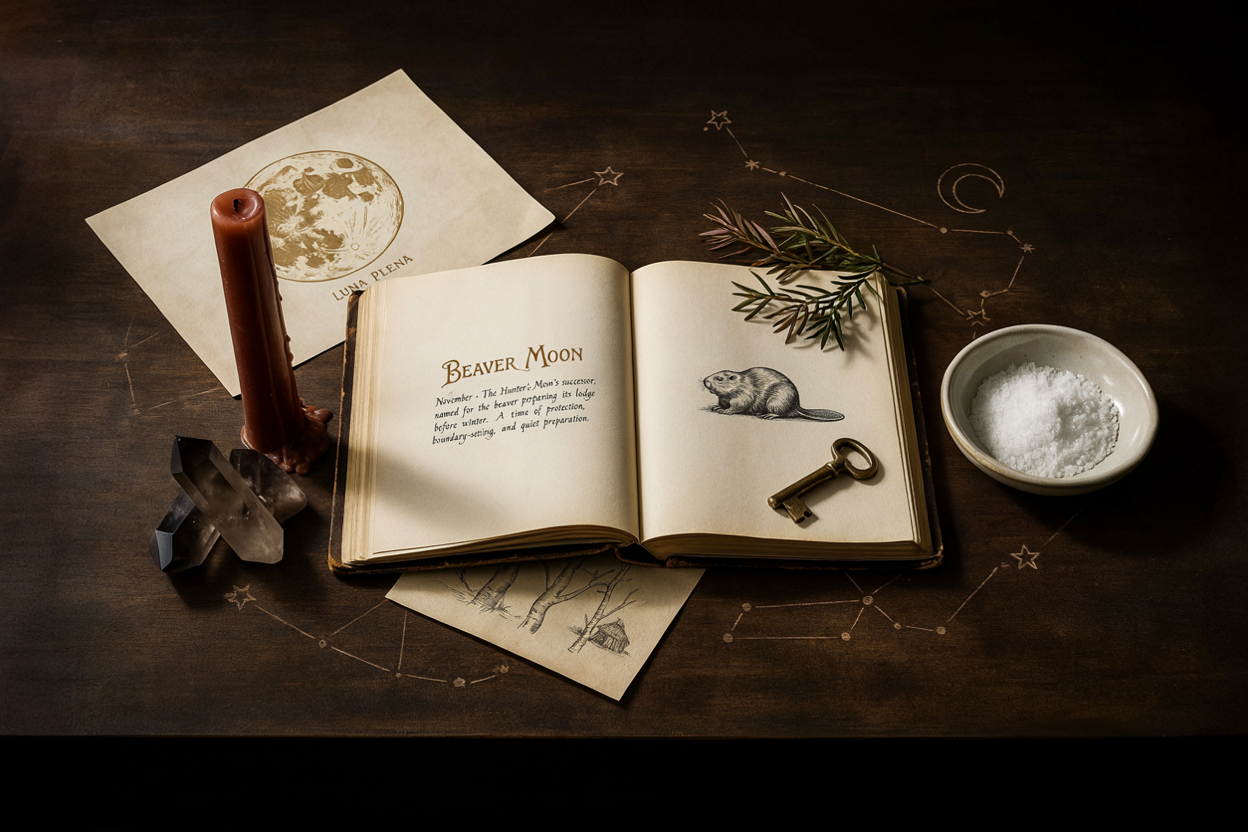
Cold Moon vs. Beaver Moon
The Beaver Moon and Cold Moon both belong to the darker part of the year, but they carry different symbolism.
- The Beaver Moon is associated with building, shelter, preparation, persistence, boundaries, and winter readiness.
- The Cold Moon is associated with stillness, reflection, closure, endurance, protection, and the stark clarity of deep winter.
The Beaver Moon prepares the shelter. The Cold Moon enters the stillness.
Cold Moon vs. Wolf Moon
The Cold Moon comes before the Wolf Moon in the cycle of named full moons.
- The Cold Moon is associated with the end of the year, winter stillness, closure, reflection, and release.
- The Wolf Moon is associated with January, hunger, instinct, survival, protection, and listening through the dark.
The Cold Moon closes the year. The Wolf Moon begins the next cycle in winter’s depth.
Misconceptions About the Cold Moon
A common misconception is that the Cold Moon is only bleak or harsh. While it is associated with winter and darkness, it also carries themes of clarity, rest, protection, reflection, and the quiet beginning of renewal.
Another misconception is that the Cold Moon must only be used for endings. It may also be used to prepare for a new cycle, protect rest, honor survival, and clarify future intentions.
A third misconception is that stillness means nothing is happening. In seasonal symbolism, stillness often protects the hidden work of renewal.
Related Terms
- Full Moon
- Moon Magic
- Lunar Magic
- Moon Phase
- Winter Magic
- Yule
- Winter Solstice
- Protection
- Banishing
- Release
- Shadow Work
- Ancestor Work
- Reflection
- Correspondence
- Ritual
- Altar
- Divination
- Beaver Moon
- Wolf Moon
- Grimoire
Summary
The Cold Moon is the traditional name for the December full moon. It is associated with winter, long nights, stillness, endurance, reflection, closure, release, protection, and the year’s final lunar threshold.
In witchcraft, the Cold Moon is often used for year-end rituals, release work, protection magic, divination, ancestral reflection, shadow work, and spiritual rest.
It is a moon of silence, clarity, and the wisdom found at the edge of the year.




Leave a Reply