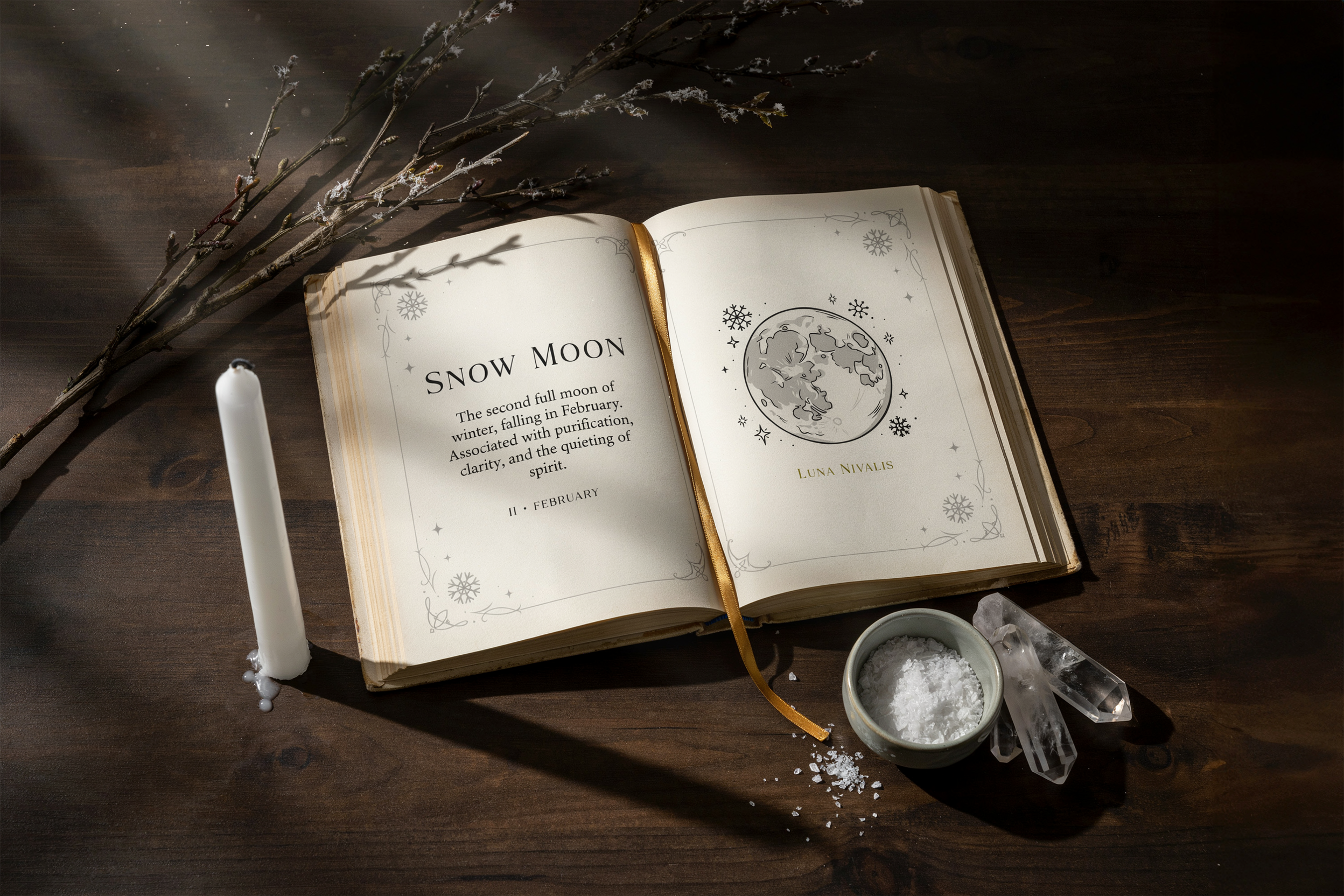
The Snow Moon is a traditional name for the full moon that occurs in February. It is associated with deep winter, snow, purification, endurance, silence, scarcity, reflection, and the slow preparation for renewal.
In witchcraft and seasonal spirituality, the Snow Moon is often interpreted as a full moon of cleansing, patience, inner stillness, spiritual clarity, and release before the first visible signs of spring.
Definition of Snow Moon
The Snow Moon is the name commonly given to the February full moon.
It is one of the traditional full moon names used to mark the lunar cycle through the year. These names often reflect seasonal weather, animal behavior, agricultural rhythms, survival concerns, and folklore.
The Snow Moon belongs to the later part of winter in the Northern Hemisphere. Its name refers to the heavy snowfall often associated with February, a time when the land may still appear frozen, silent, and covered.
Meaning of the Snow Moon in Witchcraft
In witchcraft, the Snow Moon is often associated with purification, release, stillness, protection, patience, and spiritual preparation.
This moon carries the symbolism of winter’s white covering. Snow may conceal, preserve, quiet, cleanse, and reveal. It can soften a landscape, but it can also expose tracks, patterns, and hidden movement.
For this reason, the Snow Moon is often used for reflection and clearing. It is a full moon for noticing what has settled, what has become heavy, and what must be released before renewal can begin.
Seasonal Symbolism of the Snow Moon
The Snow Moon belongs to the threshold between deep winter and the earliest promise of spring. The light is slowly returning, but the cold season has not yet ended.
Common seasonal themes of the Snow Moon include:
- Snow
- Silence
- Stillness
- Purification
- Endurance
- Scarcity
- Patience
- Reflection
- Inner clarity
- Spiritual cleansing
- Preparation
- Dormancy
- Hidden life beneath the surface
The Snow Moon is a moon of quiet examination. It asks what remains after the noise has fallen away.
Why Is It Called the Snow Moon?
The name Snow Moon is commonly connected to February’s heavy snow in many parts of the Northern Hemisphere. Historically, this part of the year could bring harsh weather, limited food, difficult travel, and long periods of cold.
The name reflects the visible character of the season: snow-covered fields, frozen ground, pale light, and a world temporarily slowed.
In symbolic terms, snow represents both covering and cleansing. It can hide what lies beneath, but it can also make tracks visible. It creates stillness while preserving life below the surface.
Snow Moon Correspondences
Snow Moon correspondences may be used in altar work, spellwork, journaling, divination, cleansing, or seasonal ritual.
Common correspondences include:
- Colors: white, silver, pale blue, gray, black
- Animals: owl, wolf, hare, deer, raven
- Elements: water, air, earth
- Herbs: rosemary, lavender, cedar, pine, sage, bay, juniper
- Crystals: clear quartz, selenite, moonstone, snowflake obsidian, hematite, smoky quartz
- Symbols: snowflakes, ice, bare branches, lanterns, bowls of water, white candles, tracks in snow
- Themes: cleansing, release, clarity, patience, silence, endurance, spiritual preparation
- Season: late winter
- Moon phase: full moon
These correspondences are symbolic rather than fixed. They may be adapted according to climate, tradition, region, and personal practice.
Magical Uses of the Snow Moon
The Snow Moon may be used for magical work connected to purification, release, stillness, spiritual clarity, and preparation for change.
Common magical uses include:
- Cleansing rituals
- Releasing stagnant energy
- Clearing emotional heaviness
- Protection work
- Banishing what lingers
- Restoring spiritual focus
- Preparing for spring renewal
- Reflecting on winter lessons
- Strengthening patience
- Dream work
- Quiet divination
- Renewing altar space
- Simplifying magical practice
The Snow Moon is especially suited to work that removes excess. It is a moon for clearing the path before growth begins.
Snow Moon and Cleansing
Cleansing is one of the strongest themes of the Snow Moon. Snow is visually associated with whiteness, quiet, purity, and renewal, though its symbolism is more complex than simple cleanliness.
In magical practice, the Snow Moon may be used to cleanse a home, altar, tool, charm, grimoire, or spiritual routine. It may also be used for energetic cleansing after a difficult season.
A Snow Moon cleansing may focus on what has gathered during winter: emotional residue, stagnant habits, old fears, unfinished thoughts, or spiritual clutter.
Snow Moon and Release
The Snow Moon is also connected to release. As winter begins its slow movement toward spring, this moon may mark what must be set down before the next cycle of growth.
Release work during the Snow Moon may focus on:
- Old grief
- Lingering resentment
- Stagnant energy
- Unhelpful habits
- Fear of change
- Overcommitment
- Spiritual heaviness
- Outdated intentions
- Patterns that belong to a previous season
This release is not rushed. The Snow Moon teaches gradual clearing.
Snow Moon and Stillness
The Snow Moon carries a strong association with stillness. Snow quiets sound, slows movement, and changes the shape of familiar places.
In witchcraft, this stillness may be used for meditation, divination, dream work, silence, spiritual listening, and deep reflection.
The Snow Moon may reveal what cannot be heard during busier seasons. It invites the practitioner to listen before acting.
Snow Moon and Preparation
Although February can feel like deep winter, it also holds the first quiet preparation for spring. Seeds are not yet visible, but the cycle is shifting.
The Snow Moon may be used to prepare intentions, clear spiritual space, review plans, cleanse tools, organize a grimoire, or make room for future growth.
This moon does not demand immediate blooming. It prepares the ground.
Snow Moon Ritual Themes
A Snow Moon ritual may be built around themes such as:
- I release what has become heavy.
- I cleanse what has grown stagnant.
- I honor the wisdom of stillness.
- I prepare for renewal without rushing.
- I clear space for what is ready to emerge.
- I listen beneath the silence.
- I trust what is forming below the surface.
- I let winter teach me what remains.
These themes may be used in spellwork, altar design, journaling, divination, or meditation.
Snow Moon Altar Ideas
A Snow Moon altar may include objects connected to snow, silence, cleansing, protection, and late winter.
Possible altar items include:
- A white, silver, gray, black, or pale blue candle
- A bowl of snow or water
- A clear quartz, selenite, moonstone, or snowflake obsidian
- Pine, cedar, rosemary, lavender, or juniper
- A white cloth
- A small bowl of salt
- Snowflake symbols
- Bare branch imagery
- Written release intentions
- A divination tool
- A lantern or candleholder
- A clean page in a grimoire
The altar may be simple and sparse. The Snow Moon’s symbolism is strongest when the space feels clear, quiet, and intentional.
Snow Moon Journaling
Journaling during the Snow Moon may focus on cleansing, patience, release, and preparation.
Possible prompts include:
- What has become too heavy to carry forward?
- What needs to be cleansed from my space, mind, or practice?
- What has winter taught me so far?
- Where am I being asked to wait?
- What signs of renewal are not yet visible?
- What patterns are ready to dissolve?
- What do I need to simplify?
- What can be prepared now, before growth begins?
These prompts may be used in a grimoire, moon journal, or seasonal reflection practice.
Snow Moon vs. Wolf Moon
The Wolf Moon and Snow Moon both belong to winter, but their symbolism differs.
The Wolf Moon is often associated with instinct, hunger, protection, survival, and listening to what calls from the dark.
The Snow Moon is more strongly associated with cleansing, quiet, release, endurance, and preparation beneath stillness.
Both moons belong to the cold season. The Wolf Moon listens for the call. The Snow Moon studies the silence after it falls.
Snow Moon vs. Worm Moon
The Snow Moon occurs before the Worm Moon. The Snow Moon belongs to late winter, when the land may still be frozen or covered. The Worm Moon belongs to the first signs of thaw, soil movement, and spring’s return.
Symbolically, the Snow Moon clears and prepares. The Worm Moon stirs and awakens.
Misconceptions About the Snow Moon
A common misconception is that the Snow Moon has one fixed meaning. In reality, its meaning varies by tradition, region, climate, and practitioner.
Another misconception is that the Snow Moon must feel gentle or peaceful. Snow can symbolize beauty and silence, but it may also symbolize hardship, scarcity, isolation, and endurance.
A third misconception is that the Snow Moon must be observed only in snowy places. Even in regions without snow, the symbolic themes of cleansing, stillness, late winter, and preparation may still be used.
Related Terms
- Full Moon
- Moon Magic
- Lunar Magic
- Moon Phase
- Winter Magic
- Cleansing
- Banishing
- Protection
- Release
- Correspondence
- Ritual
- Altar
- Divination
- Wolf Moon
- Worm Moon
- Grimoire
Summary
The Snow Moon is the February full moon, traditionally associated with snow, deep winter, silence, endurance, and scarcity. In witchcraft, it is often used as a time for cleansing, release, spiritual clarity, quiet reflection, and preparation for renewal.
The Snow Moon belongs to the still part of the year, when the surface may appear frozen but the cycle is already beginning to turn. It is a moon of clearing, waiting, and listening beneath the white hush of winter.




Leave a Reply